As average cost to put vinyl siding on a house takes center stage, this opening passage beckons readers with informative insights on the factors, breakdown, variances, and disparities, ensuring a reading experience that is both engaging and enlightening.
Exploring the nuances of vinyl siding costs can provide valuable knowledge for homeowners looking to renovate or improve their property.
Factors Affecting Vinyl Siding Cost
When considering the cost of putting vinyl siding on a house, several factors come into play that can influence the overall price. Understanding these factors is essential for homeowners planning to invest in vinyl siding.
Quality of Vinyl
The quality of the vinyl siding material itself is a significant factor in determining the cost. Higher-quality vinyl with better durability, color retention, and resistance to fading or warping will typically cost more than lower-grade options.
Size of the House
The size of the house directly impacts the amount of vinyl siding needed for installation. Larger homes require more materials, labor, and time to complete the project, resulting in a higher overall cost compared to smaller homes.
Complexity of the Design
Houses with intricate designs, multiple stories, or unique architectural features may require additional labor and expertise to install the vinyl siding properly. The complexity of the design can increase the overall cost of the project.
Additional Preparatory Work
Before installing vinyl siding, certain preparatory work such as removing old siding, repairing damaged walls, or adding insulation may be necessary. These additional tasks can add to the overall cost of the project.
Location of the House
The location of the house can also influence the cost of vinyl siding installation. Factors such as local labor rates, building codes, and permit requirements can vary from one area to another, impacting the total cost of the project.
Contractor’s Experience
The experience and expertise of the contractor hired for the vinyl siding installation can affect the cost. Contractors with a high level of skill and reputation may charge more for their services, but they can also ensure a quality installation that lasts longer.
Maintenance and Warranty
Consider the long-term maintenance and warranty options offered with the vinyl siding. Higher-quality materials with extended warranties may have a higher upfront cost but can save money in the long run by reducing the need for repairs or replacements.
Average Cost Breakdown
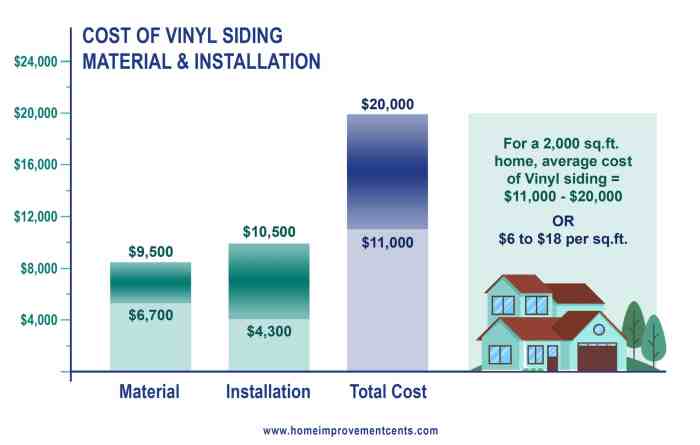
When it comes to the average cost of vinyl siding installation, it is essential to understand how the total cost is broken down into material, labor, and other associated expenses.
Material Cost
The material cost typically accounts for a significant portion of the total vinyl siding installation cost. This cost includes the actual vinyl siding panels, trim pieces, insulation materials, and any additional accessories required for the installation. The quality and type of vinyl siding chosen will greatly influence the material cost.
Labor Cost
Labor cost is another crucial component of the total cost of vinyl siding installation. This cost covers the wages of the professionals carrying out the installation, as well as any additional labor costs such as removal of old siding, preparation of the surface, and cleanup after the installation.
The complexity of the installation, as well as the size of the house, can affect the labor cost.
Other Associated Costs
In addition to material and labor costs, there are other associated costs to consider when budgeting for vinyl siding installation. These costs may include permits, disposal fees for old siding, equipment rental, and any unexpected expenses that may arise during the installation process.
It is essential to account for these additional costs to avoid any budget overruns.
Comparison of Costs
When comparing the distribution of costs between material and labor, it is common to see that material costs typically make up the majority of the total cost, followed by labor costs. However, the exact breakdown can vary depending on factors such as the quality of materials chosen, the complexity of the installation, and the region where the installation takes place.
Cost Variances by House Size
When it comes to the cost of installing vinyl siding on a house, the size of the house plays a significant role in determining the overall cost. Larger houses typically require more materials and labor, resulting in a higher total cost compared to smaller houses.
Let's explore how the size of the house affects the average cost of installing vinyl siding.
Small House
For a small house with an average size of around 1,000 square feet, the cost of installing vinyl siding can range from $4,000 to $7,000. The lower end of the range may apply to houses with simple designs and easy access, while the higher end may be for houses with more intricate designs or challenging installation requirements.
Medium House
A medium-sized house, ranging from 1,500 to 2,000 square feet, can cost between $6,000 to $10,000 for vinyl siding installation. The cost can vary based on the complexity of the design, any additional features like trim or accents, and the accessibility of the house for installation.
Large House
For larger houses exceeding 2,000 square feet, the cost of installing vinyl siding can be significantly higher, ranging from $8,000 to $15,000 or more. These houses typically require more materials, labor, and time to complete the installation, leading to a higher overall cost.Overall, the pattern observed is that as the size of the house increases, the cost of installing vinyl siding also tends to increase.
This is primarily due to the increased materials and labor required for larger houses, as well as any additional complexities in the installation process. It's essential to consider the size of your house when budgeting for vinyl siding installation to ensure an accurate estimate of the total cost.
Regional Cost Disparities
When it comes to the average cost of vinyl siding installation, geographical location plays a significant role in determining the final price. Different regions or states may have varying costs for vinyl siding installation due to several factors.One of the main reasons behind regional cost disparities is the difference in labor costs.
Areas with higher living expenses or labor costs will generally have higher prices for vinyl siding installation. Additionally, the availability of skilled labor in a particular region can also impact the overall cost.
Regional Comparisons
In order to understand the impact of geographical location on vinyl siding costs, let's compare the average prices in different regions:
| Region | Average Cost per Square Foot |
|---|---|
| Northeast | $3.50
|
| Midwest | $3.00
|
| South | $2.50
|
| West | $3.00
|
These are rough estimates and actual prices may vary depending on specific factors in each region.
Reasons for Disparities
The regional cost disparities in vinyl siding installation can be attributed to a combination of factors such as:
- Cost of living in the area
- Local labor rates
- Regulations and building codes
- Competition among contractors
- Climate and weather conditions
Each of these factors can influence the overall cost of the project and contribute to the differences seen in various regions across the country.
Final Wrap-Up
In conclusion, understanding the intricacies of vinyl siding costs can empower homeowners to make informed decisions about their home improvement projects. By grasping the factors, breakdown, variances, and disparities, individuals can navigate the realm of vinyl siding installation with confidence and clarity.
Popular Questions
What factors influence the cost of putting vinyl siding on a house?
Factors include material quality, house size, labor costs, and geographical location. Each plays a role in determining the final cost.
How does the size of the house affect the average cost of installing vinyl siding?
Generally, larger houses require more materials and labor, leading to higher overall costs compared to smaller homes.
What are the reasons behind regional cost disparities in vinyl siding installation?
Regional cost differences can be attributed to varying supply and demand dynamics, labor costs, and local regulations affecting construction expenses.